A camera inspection is the only way to know what your lateral actually is before money gets spent on it. California housing stock spans vitrified clay through the mid-1960s, Orangeburg fibre conduit in the postwar tract years, cast iron in the pre-war urban cores of San Francisco, Oakland, Pasadena and central Los Angeles, and ABS or PVC from the mid-1970s on. Each one fails differently and each one rules certain repairs in or out. Quoting a lining job on a pipe that turns out to be delaminated Orangeburg wastes everyone's time.
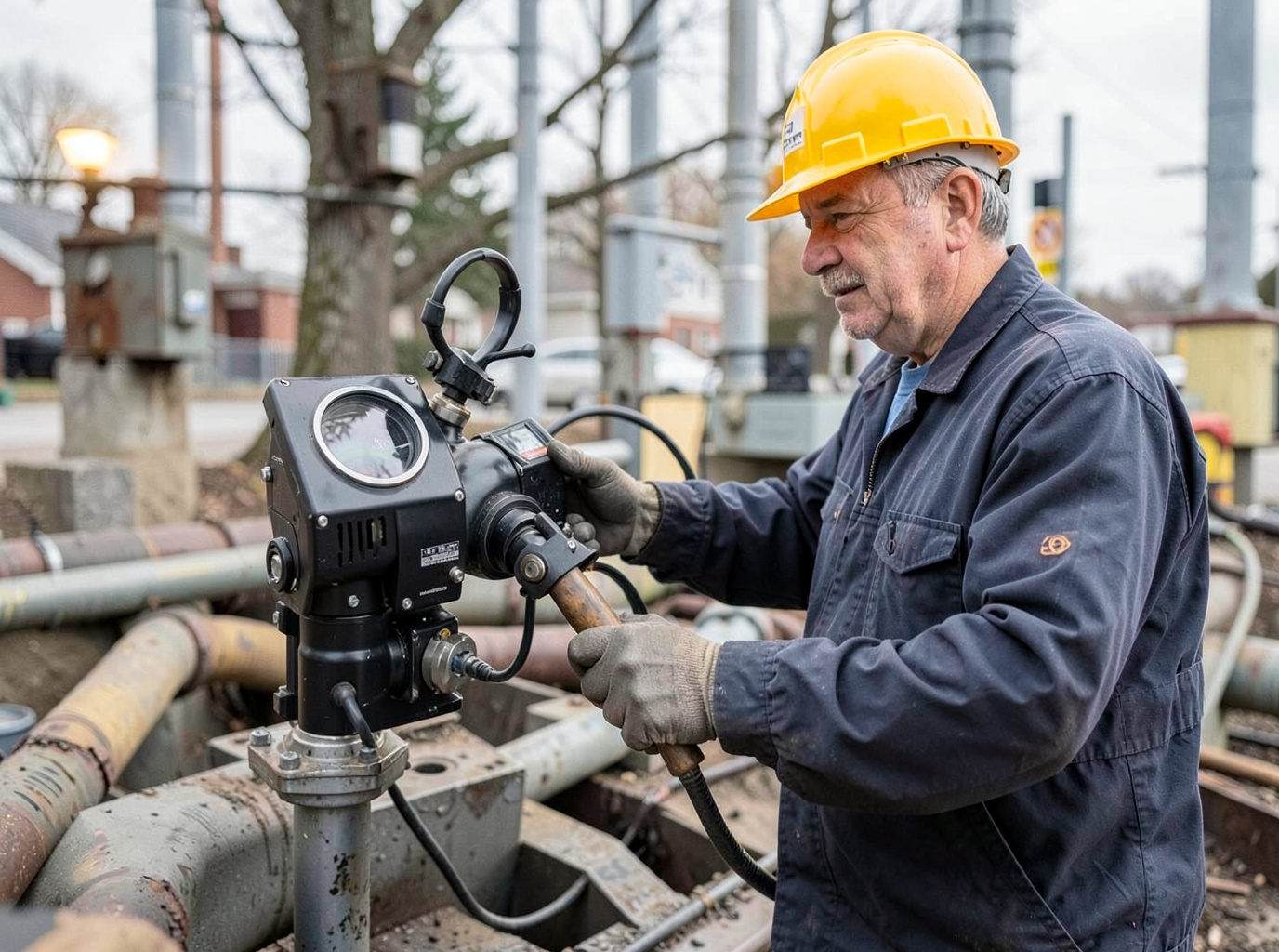
We run a self-levelling push camera from a cleanout or a pulled toilet and survey the whole run to the city main, recording as we go. A sonde in the camera head lets us mark the defect on the surface with a locator, so you get a depth and a position rather than a vague distance down the pipe. On a hillside lot in the Berkeley Hills, Hollywood Hills or above Laguna Beach, that depth number is what decides whether a repair is a morning's work or a shored excavation.
What the camera finds in California splits along predictable lines. Separated joints and offsets where expansive clay has gone through its annual swell and shrink. Bellies holding standing water where soft ground has consolidated under the pipe. Root masses at joints, usually traceable to a specific tree. Scale narrowing cast iron in the hard imported-water areas inland. Offsets at the property line or at the foundation wall where ground motion has racked the pipe out of alignment.
If you are selling in Oakland, Berkeley, Alameda, Piedmont, Emeryville, Albany, El Cerrito or Kensington, the inspection is not optional. The East Bay regional private sewer lateral programme requires a compliance certificate showing the lateral is leak-free before many sales and remodels can close, and Berkeley runs its own separate programme alongside the regional one. We shoot the footage, tell you plainly whether the line will pass a verification test, and if it will not, show you exactly what has to be fixed first.
Technician insight
The single most useful thing a camera tells you in California is not where the blockage is, it is what the pipe is. We have been called to quote trenchless lining on dozens of mid-century homes where the camera showed Orangeburg instead of clay, and lining is not an option on a conduit that has already lost its wall section. Knowing the material before the quote changes the entire conversation, and it is the reason we will not price a repair off a description over the phone.
Sewer Camera Inspection Services We Offer
✓Pre-purchase Lateral Inspection
Survey before you close on a California home, so a failing clay or Orangeburg lateral is priced into the deal rather than discovered after.
✓EBMUD Compliance Inspection
Camera survey and verification-test assessment for East Bay properties that need a private sewer lateral compliance certificate to close.
✓Defect Locating and Depth Marking
Sonde locating that marks the break on the surface, so excavation is targeted instead of exploratory.
✓Post-repair Verification
Second survey after jetting, lining or replacement confirming the line is clear, correctly graded and properly connected.
Sewer Camera Inspection Cost in CA
| Service | Typical Range | What Affects It |
|---|---|---|
| Standard residential camera inspection | $175 - $350 | Existing accessible cleanout |
| Inspection with sonde locating and depth marks | $275 - $500 | Includes surface marking |
| Cleanout access required first | $300 - $700 | Where no cleanout exists |
| EBMUD compliance survey and assessment | $350 - $650 | East Bay programme cities |
| Commercial or multi-unit survey | $450 - $1,200 | Depends on run length and branches |
Ranges are typical for CA and confirmed with an exact written quote before any work starts. Rocky or deep excavation and permit costs vary by city.
How it works
- 1
Find access
We locate an existing cleanout, or pull a ground-floor toilet where none exists. On slab-on-grade homes common across Southern California there is often no basement access, so the cleanout matters.
- 2
Survey the full run
The camera goes the whole distance to the city connection, not just to the first blockage. Stopping at the first problem is how second defects get missed.
- 3
Locate and mark
Where there is a defect worth repairing we locate the camera head from the surface and mark position and depth, so you know what excavation would involve.
- 4
Report in plain terms
You get the footage, a written list of defects by distance, and a straight answer on what the pipe needs now versus what can wait.
Pricing
Most residential inspections are a flat fee, credited against the repair if you go ahead with us.